Lesson 07
How Much Does a Website Cost in 2026? Per Month, Per Year, Five Years
In this lesson
How much does a website cost depends far less on the software than on who does the work, and the honest answer spans three orders of magnitude: a dollar or two a month if you write the pages yourself, tens of thousands if an agency builds them. For a typical first site on a paid builder, budget $17 to $29 a month on annual billing. That is $204 to $348 a year, and roughly $1,100 to $1,820 over five years once the domain starts renewing.
This lesson prices six routes three ways, per month, per year and over five years, and always at the renewal rate rather than the promotion, because the renewal is what you pay in four of those five years. It is written for one person's first site rather than a company's web budget. If you are writing the pages yourself, the domain is nearly your whole bill; if you are hiring, the build fee dwarfs everything else here and the upkeep is the part worth negotiating.
Vendor prices below were read from US pricing pages on 9 and 10 October 2026, before tax; other countries see different figures. Everything involving people — freelancers, agencies, maintenance — is an industry estimate, and is labelled as one.
The routes, priced side by side
Five years is the column that matters. The first three are what a pricing page shows you; the last is what you have actually paid by the time you would think about changing anything.
| Route | Per month | Year one | Each year after | Five-year total |
|---|---|---|---|---|
| Hand-coded static | About $1–$2 (the domain) | Domain only, $11–$25 | $11–$25 | $56–$125 |
| Free builder plan | $0 | $0, on the platform's subdomain | $0 | $0, but the address is never yours |
| DIY hosted builder | $17–$29 on annual billing | $204–$348, domain free the first year | $204–$348 plus a domain renewal | $1,100–$1,820 |
| Self-hosted WordPress | $2.99–$4.99 hosting in year one, then $17.99–$29.99 | $36–$60 hosting, plus $0–$300 theme and plugins | $216–$360 hosting plus a domain renewal | $979–$1,579 before themes and plugins |
| Freelancer | Hosting as for WordPress, plus any paid support | $1,500–$8,000 per project, plus hosting | Hosting and domain, plus paid support | About $2,480–$9,580 |
| Agency | $83–$500 in maintenance | $10,000–$35,000; some from about $6,500 | $1,000–$6,000 a year | $14,000–$59,000 |
The builder and WordPress totals assume a $20-a-year domain renewal from year two, the middle of the typical retail range. The static row shows the whole range, from the registry floor to a retail renewal. The freelancer total adds a WordPress hosting bill to the build fee and leaves out paid support, which varies too much to sum.
How much a website costs per month
Strip a website down to what you pay each month just to keep it online and the numbers start small. Writing the files yourself and putting them on a free static host leaves only the domain, which works out at about $1 to $2 a month. A paid builder costs $17 to $29 a month on annual billing for an entry or mid plan: in October 2026 Wix Light is $17, Squarespace Basic and Duda Basic are $19, and Wix Core and Squarespace Core are $29, with business plans from $39. WordPress on shared hosting starts below all of them and does not stay there. SiteGround's StartUp plan is $2.99 a month for the first 12 months and $17.99 after that.
Two habits move the monthly figure more than the choice of vendor. Billing monthly on a builder costs about a third more than billing annually: Squarespace Basic is $25 a month billed monthly against $19 billed annually, and Core is $39 against $29. And introductory hosting rates are only on offer prepaid; the SiteGround figure above is a 12-month prepayment. Anything else that operating a website can cost, such as a mailbox or a premium plugin, is optional on a first site.
How much a website costs per year
The yearly figure is the monthly one times twelve, plus the domain, and the domain is the line budgets forget. A .com has a floor set by the registry. Verisign announced in April 2026 that its wholesale price rises from $10.26 to $10.97 on 1 November 2026, and with the $0.20 ICANN fee on top, no registrar can sell or renew one for less than $11.17 after that date without losing money on it. Typical retail renewals sit around $18 to $25 a year, as an industry estimate. Wix, for example, charges $7.90 for the first year of a .com and $21.35 to renew it.
So, on annual billing: about $11 to $25 a year for a hand-coded site, $204 to $348 for an entry or mid builder plan, and $36 to $60 of WordPress hosting in year one that becomes $216 to $360 from year two. Wix, Squarespace and SiteGround all include the domain for year one, which is exactly why year one is the wrong year to compare: it is the only year in which the hosting and the address are both discounted.
Plate 6 · drawn from the table above
Year one, five routes, on a scale that has to be folded to fit.
Hand-coded static
Domain only, $11–$25
Self-hosted WordPress
$36–$60 hosting, plus $0–$300 theme and plugins
DIY hosted builder
$204–$348, domain free the first year
Freelancer
$1,500–$8,000 per project, plus hosting
Agency
$10,000–$35,000; some from about $6,500
each gridline, ten times the last
DIY on a hosted builder
A hosted builder rents you the editor, the hosting and the certificate as one subscription, and for a first site the subscription is the entire bill. The bands have moved since this lesson's August check: entry plans now run $17 to $19 a month on annual billing, mid plans $29, business plans from $39, and the top tiers $99 to $159. Budget builders sold on long prepayment sit below those bands; the edge cases at the end price one.
Price the plan that has the features you need now and ignore the ones above it. Read the selling terms before you pick the cheapest tier, too: on Squarespace Basic, 2% of every online-store sale goes to the platform on top of card fees, and Core takes that to zero, which is a good illustration of how entry tiers recover their price. Squarespace is one example of this category. Its 14-day trial asks for no card, which is long enough to price your own site before paying for anything.
Self-hosted WordPress
The software costs nothing; the hosting is the bill, and it is the line where introductory pricing does the most work. Shared hosting is the usual starting point. SiteGround's StartUp plan is $2.99 a month and GrowBig $4.99, each prepaid for 12 months with a domain included for the first year, renewing at $17.99 and $29.99 a month. Managed WordPress hosting elsewhere runs roughly $15 to $35 a month, as an industry estimate. Add anything from nothing to about $300 a year if you buy a premium theme or paid plugins, which a first site rarely needs.
That makes year one $36 to $60 in hosting and year two $216 to $360: six times as much, for the same plan on the same server. Nothing changed except the calendar. SiteGround is one example of a host in this category, and that is an affiliate link. Whichever host you choose, read the renewal line under the headline price before you reach the checkout.
The renewal cliff: why year two costs more
Nearly every first-year price in this lesson is a promotion, and none of them is hidden: the renewal is printed under the headline, in smaller type. The cliff turns up in three places. In hosting, SiteGround's StartUp goes from $2.99 to $17.99 a month, GrowBig from $4.99 to $29.99 and GoGeek from $7.99 to $44.99. In builders sold on long prepayment, Hostinger's builder Premium plan is $2.99 a month across a 48-month term and renews at $10.99. In domains, Wix's $7.90 first year of a .com renews at $21.35.
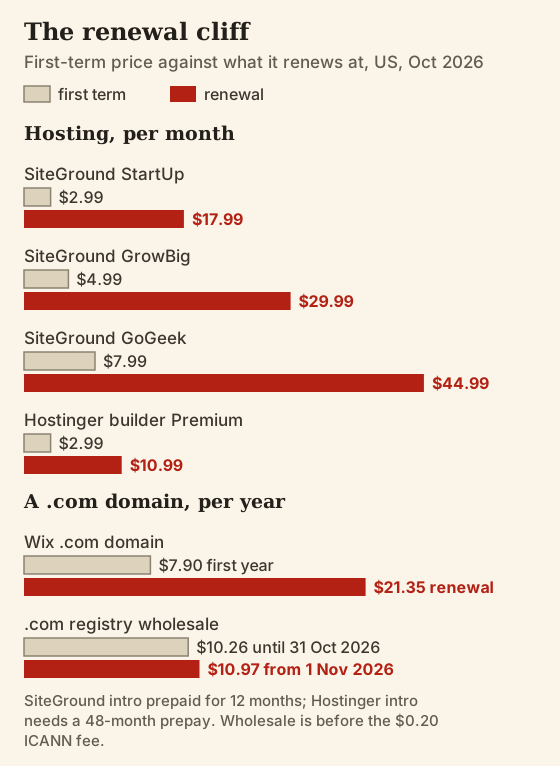
The domain cliff is the most instructive of the three, because the registry charges a registrar the same to register a .com as to renew one. A cheap first year is the registrar choosing to lose money on you now and recover it later. That is an ordinary business model, and a fair deal if you know about it; it only becomes a trap when the budget was written from the first invoice. The registry price is not standing still either. Its contract lets Verisign raise the .com price by up to 7% in each of the last four years of every six-year term, and the November rise is one of those.
The five-year total, and why it is the only honest number
Five years is long enough to include four renewals and short enough to plan for, which makes it the fairest single figure for comparing routes. With a $20 domain renewal from year two, a $17 builder plan comes to $1,100 and a $29 plan to $1,820. WordPress on SiteGround StartUp comes to $979, and on GrowBig $1,579. A hand-coded site is the domain alone.
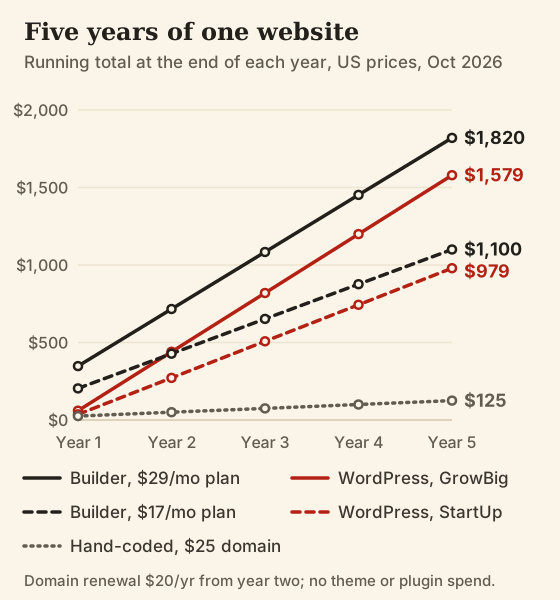
Read the chart for its shape as much as its end points. The WordPress lines start below the builder lines and climb fastest, because year one is a sixth of every later year. The builder lines are straight, because the builders priced here charge the same every year on annual billing. Over five years the two routes cost about the same in cash. What differs is what you hold at the end: a builder site stays with the builder, while WordPress files and a database move to any host that runs it. And there is no useful average cost of a website across routes this different. A mean of $56 and $59,000 describes nobody.
None of this is an argument against builders. A builder subscription is rent on a finished, maintained service, and the rent is what you pay never to think about updates, backups or certificates. That is a good trade for a great many people, as long as it is one you chose.
Paying a freelancer or an agency
Industry estimates, every figure in this section. Freelancers charge roughly $50 to $150 an hour, or $1,500 to $8,000 for a small-business project, and marketplace rates spread from about $20 to $220 an hour. Agencies typically quote $10,000 to $35,000, with some starting near $6,500 and online shops commonly passing $20,000. At that price you are buying strategy, copy, design and someone accountable for the result, not better software.
Split what you pay a person into the one-off and the ongoing, because only the first usually gets negotiated. The upkeep, meaning hosting, updates, small edits and someone to call when it breaks, is estimated at $1,000 to $6,000 a year for a small site: $83 to $500 a month for as long as the site exists. Over five years an agency site therefore comes to roughly $14,000 to $59,000, and a freelancer build that you then host yourself to about $2,480 to $9,580. Before you sign, ask whose name is on the hosting account and the domain. If it is not yours, the five-year figure includes whatever it costs to get them back.
Free routes, and where they stop being free
Two rows in the table cost nothing in cash. A free builder plan puts your site on the platform's own subdomain, usually with its branding on your pages. Free static hosting serves files you wrote, unbranded, under acceptable-use terms that often rule out running a business. Both are respectable for a first site; neither covers the domain. The lesson on making a website for free covers what each free option takes in place of money, and the lesson on building without a builder prints each free host's published limits.
Which budget fits which route
Start from what you can pay every month for five years rather than what you can pay this week, and the route mostly chooses itself.
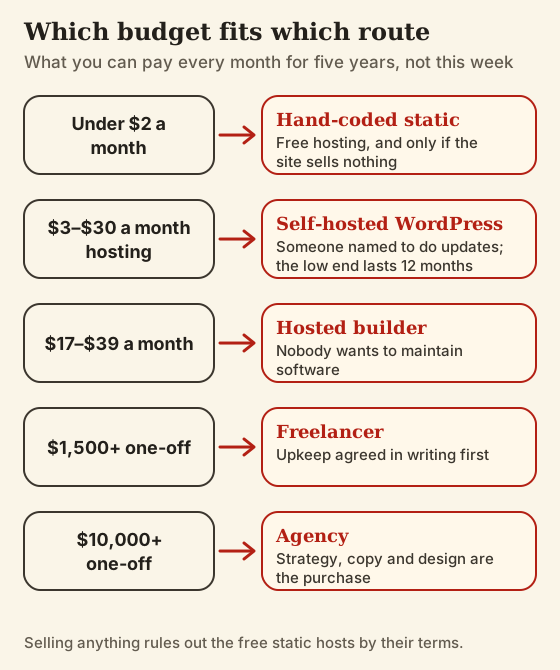
Under $2 a month: write the pages yourself, host them free and spend the money on the domain, as long as the site does not sell anything, since the free hosts' terms usually forbid it. $3 to $30 a month for hosting: WordPress, if someone is named as the person who updates it, remembering that the bottom of that range lasts twelve months. $17 to $39 a month: a hosted builder, if nobody on your side wants to maintain software. A one-off $1,500 or more: a freelancer, with the upkeep agreed in writing before the build starts. $10,000 and upwards: an agency, when strategy, copy and design are what you are really buying.
Edge cases that change the arithmetic
You are outside the US
Every vendor price here was read from a US session, before tax. Several of these companies show different plans and prices by country and add VAT or GST at checkout, so re-price your route on the vendor's page from where you live. The shape of the bill stays the same: an introductory rate, a renewal rate, a domain, and people's time.
You want to sell
Selling changes the bill in two ways. Plans that take payments cost more: on Wix, payments start at Core, not Light. Some entry plans also add a transaction fee on top of the card processor's, as Squarespace Basic does. And free static hosting drops out altogether, because GitHub Pages' terms exclude running an online business or e-commerce.
You prepay for years
A 48-month prepayment locks in a low monthly rate and asks for the whole amount today. On Hostinger's builder Premium plan that means paying $143.52 on day one and $10.99 a month once the term renews, so five years of plan fees come to $275.40, far below the builder band above. It also commits you for four years to a platform you have not tried yet, so read the refund terms first; Hostinger's money-back window is 30 days.
Where this sits in the course
Cost is one input into choosing a route, and rarely the one that settles it; who will maintain the site usually does. The complete guide to how to make a website weighs every input together, cost included.
Questions from the class
How much does a website cost per month?
How much does a website cost per year?
What is the cheapest way to put a real website online?
Does a domain cost money every year?
Why does my website cost more in year two?
Before you move on
- Your budget is a five-year total, not a first-year total.
- Every line in it uses the renewal price, not the introductory one.
- Four domain renewals are in it.
- You have compared annual and monthly billing for the plan you chose.
- If the site will sell, its plan takes payments and its host's terms allow selling.
- You know who maintains the site, and what their time costs.
Next up — Lesson 08: Zero to live in an afternoon. Or jump to the complete path.